
Contents
Risks and Side Effects of Laser Eyebrow Tattoo Removal Procedure
With cosmetic tattoos like eyebrow tattoos on the rise, comes the need for removal solutions. For those who are unhappy with their permanent makeup or whose tattoo pigments have faded or changed over time, laser eyebrow tattoo removal is a popular option. But laser tattoo removal isn’t without its challenges and risks. This article will cover the side effects, reactions and best aftercare for the eyebrow tattoo removal process.
While laser removal has come a long way, it’s important to understand the process of removal especially for unwanted eyebrow tattoos. The following will cover the risks, side effects and what to expect when getting this treatment.
How Laser Eyebrow Tattoo Removal Works
Laser eyebrow tattoo removal works by using laser light to break down the tattoo ink trapped in the dermis layer of the skin. A high intensity beam of light energy targets the ink colours, breaking down the particles into smaller pieces. The body then absorbs and eliminates these particles naturally over time. The treatment requires multiple laser sessions, usually 6-8 weeks apart to remove the unwanted pigment completely.
Modern lasers like Q-Switched lasers can work on various tattoo characteristics, ink colour, type of ink used and size of the brow tattoos. Black tattoo ink is the easiest to remove, while lighter inks like yellow pigment or aged orange tattoo may require more specialized approaches and laser parameters.
Side Effects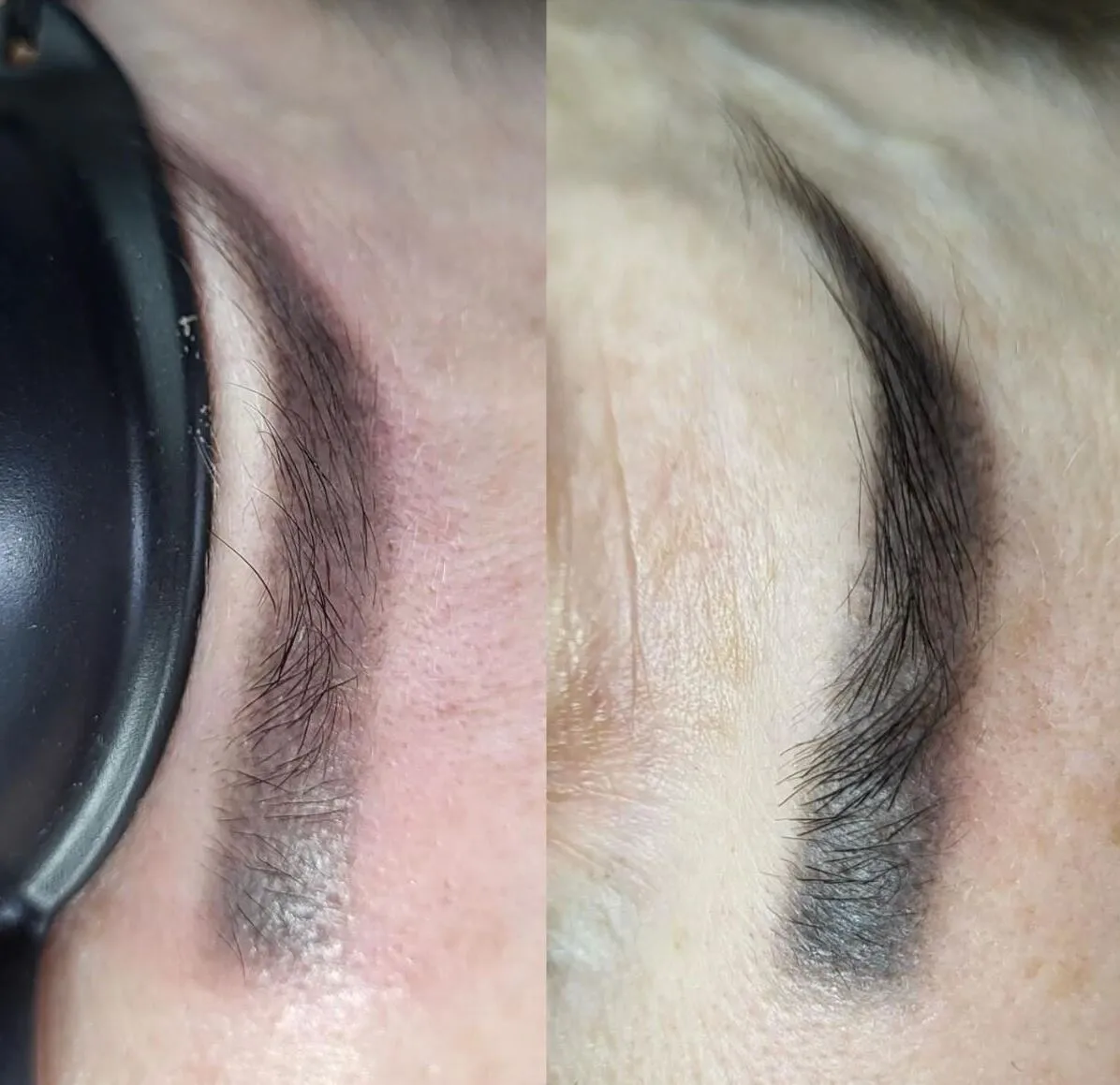
Laser eyebrow tattoo removal is generally safe but some common side effects are:
- Redness and Swelling
Temporary redness and swelling is normal after each session, usually a few days. This is because the laser energy disrupts the skin surface. - Itching and Dryness
As the skin heals you may experience itching or dryness. Don’t scratch the area to prevent further irritation. - Temporary Skin Lightening (Hypopigmentation)
One of the most common side effects is hypopigmentation where the treated area becomes lighter than the surrounding skin. This usually fades over time but can take months to return to normal. - Blisters and Scabs
Occasionally blisters or scabs may form on the treated area. Proper aftercare including moisturizing and avoiding direct sunlight can prevent these from leaving scars.
Serious Risks to Consider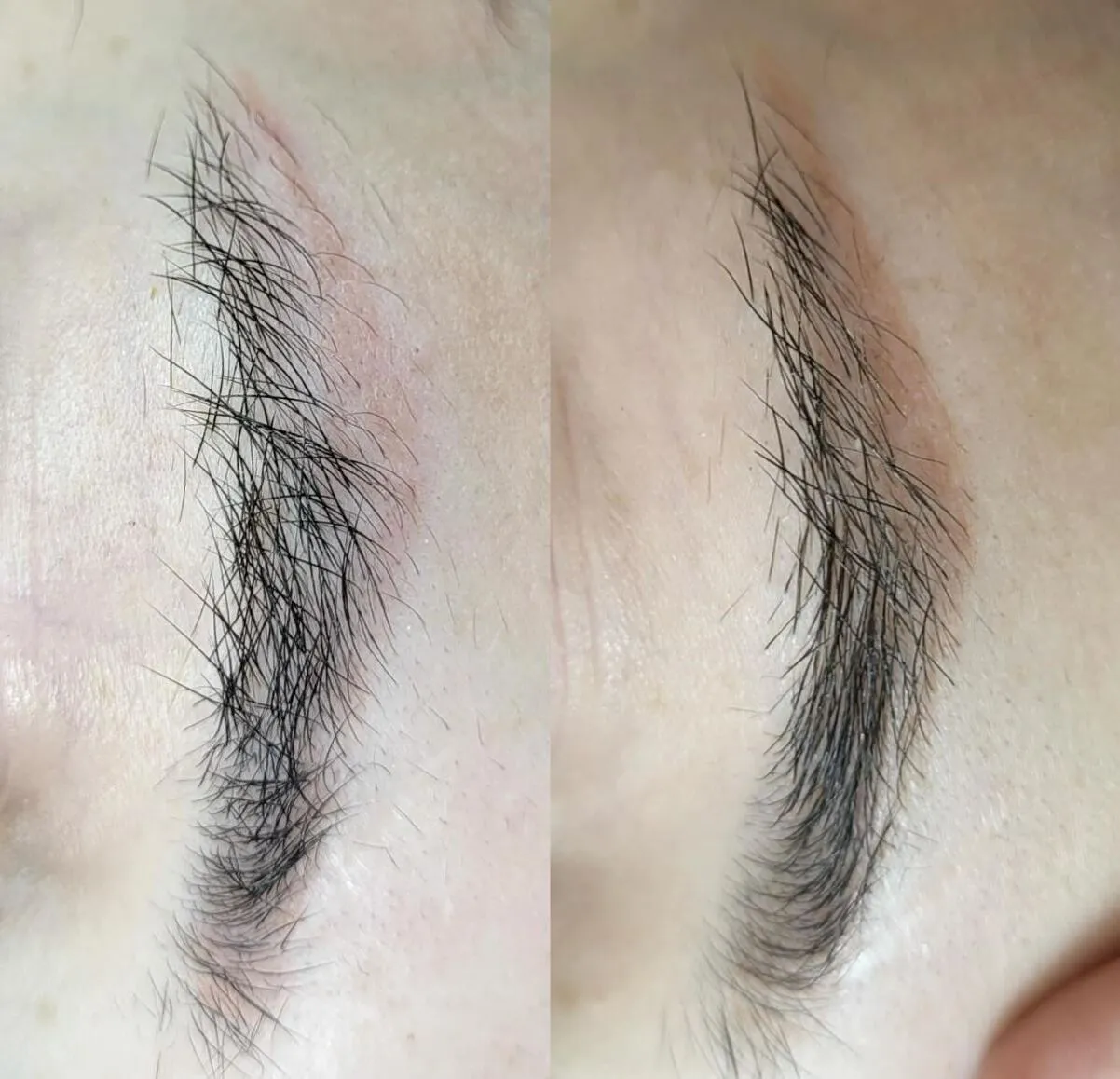
While side effects are rare, there are some serious risks to be aware of:
- Scarring
If the laser goes too deep or aftercare isn’t followed, scarring can happen. This is especially important for delicate areas like the eyebrows, where scars can change the natural shape. - Hyperpigmentation
Hyperpigmentation (darkening of the skin) can happen if the laser stimulates too much melanin. People with darker skin tones are more prone to this. - Infection
Any procedure that breaks the skin carries risk of infection. Keeping the treated area clean and following aftercare instructions can minimize this risk. - Incomplete Ink Removal
Some tattoo ink, especially greens and blues, are harder to remove and may leave behind remnants of the original tattoo even after multiple sessions.
Risk Factors
Several factors can affect the risk level:
- Skin Type
People with darker skin tones are more prone to pigmentation changes after laser treatment. See a specialist who has experience with different skin types. - Ink Type and Depth
The color and depth of the tattoo ink will affect how well it can be removed and how much risk is involved. Some pigments are harder to break down than others. - Aftercare
Aftercare (keeping the area clean, avoiding sun, moisturizing) plays a big role in reducing risk and healing.
How to Minimize the Risk
Take these precautions to minimize the risk:
- Choose an Experienced Professional
Always go to a licensed tech who specializes in eyebrow tattoo removal. They should use the latest laser and have a portfolio of before and afters. - Follow Aftercare Instructions
Following aftercare advice (no makeup on the treated area, keep it clean) can reduce risk of infection and scarring. - Leave Time for Recovery Between Sessions
Your skin needs time to heal between sessions. Rushing the process increases the risk of pigmentation changes or scarring.
Alternatives to Laser Eyebrow Tattoo Removal
If you’re not comfortable with the risks, here are other options to consider:
- Saline Tattoo Removal
This method involves injecting saline solution into the tattooed area to draw out the ink. It’s slower than laser removal but may be less risky for some people. - Dermabrasion
Dermabrasion physically removes layers of skin including the tattoo pigment. It’s more invasive and carries more risk of scarring than laser treatments.
- Saline Tattoo Removal
Conclusion
Laser eyebrow tattoo removal is the most effective way to remove unwanted tattoos but like any cosmetic treatment, it comes with its own set of risks and side effects. By choosing a qualified professional, following aftercare and understanding your skin, you can minimize the risks and get great results. With advancements in laser technology, laser tattoo removal is still the safest and most reliable way to remove eyebrow tattoos.
FAQs
How long does it take to heal?
1-2 weeks, but can take longer for some. Follow aftercare.
How many sessions?
3-10 sessions for full removal.
Can I remove just part of my tattoo?
Yes, the laser can be used to target specific areas of the tattoo so you can adjust or reshape your brows rather than remove them entirely.
How much does it cost?
Costs vary depending on the provider, location and complexity of the removal but you can expect to pay between $200-$500 per session.
What to avoid after?
After the procedure avoid sun exposure, makeup and touching the treated area to prevent infection and promote healing.